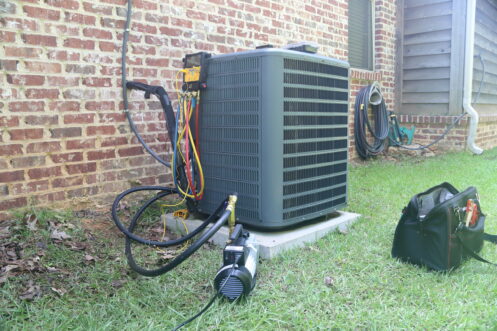
Your AC doesn’t just happen to cool your home efficiently and effectively on its own. Without enough refrigerant, your AC will develop cooling problems. That’s why it’s important to know when the refrigerant is low. This issue hits hard in Frederick, MD, where summers bring heat and heavy humidity. Low refrigerant prevents proper moisture removal, which leaves your home feeling damp, sticky, and uncomfortable.
How AC Refrigerant Works
Your AC relies on refrigerant to move heat out of your home. This process happens in a closed-loop system. That means the refrigerant stays inside sealed pipes and keeps moving through the same cycle. It absorbs heat, releases heat outdoors, and repeats the process. The refrigerant doesn’t run out or escape unless there’s a leak.
What actually happens is that the refrigerant changes form to move heat out of your home. It starts as a cold liquid inside the system. As it absorbs heat from indoor air, it warms up and turns into a gas. That gas travels outside, where the system releases the heat. Once the heat leaves, the refrigerant cools down and turns back into a liquid so the cycle can start again.
To work correctly, this process needs proper refrigerant levels. When levels drop, the system struggles to remove heat and humidity.
Signs of Low Refrigerant
The level of refrigerant in your AC should never get low. Remember, the refrigerant is in a closed-loop system, so it never runs out. If the level does drop, it’s usually because of a leak or system damage. Watch for these warning signs during Maryland’s humid season.
Weak Airflow
Low refrigerant reduces your system’s ability to remove heat. As a result, the air coming from your vents may feel weaker or less effective. This often leads to uneven cooling, where some rooms feel warmer than others.
Warm Air Instead of Cool
When the refrigerant levels drop, your AC loses its ability to remove heat from the air. Instead of delivering cool air, it pushes out slightly warm or room temperature air.
Long Cooling Cycles
Your AC should reach the set temperature within a reasonable time. When your refrigerant runs low, the system works longer to try to hit that target. You may notice it running almost nonstop, especially during humid days.
Ice Buildup on Refrigerant Lines
Low refrigerant changes the pressure inside the system. That drop in pressure causes the evaporator coil to freeze, which leads to ice forming on the lines or coil. Ice blocks airflow and makes cooling worse, not better.
Hissing or Bubbling Noises
Unusual sounds often point to a refrigerant leak. A hissing noise usually means gas escapes through a small hole. Bubbling may happen when air enters the line along with leaking refrigerant.
Higher Energy Bills
When your AC struggles to cool your home, it runs longer and uses more energy. That extra runtime shows up on your energy bill. If your bill gets higher without a known reason, low refrigerant may play a role.
Sticky Indoor Air
Your AC doesn’t just cool your home. It also removes moisture from the air. When refrigerant levels drop, humidity stays inside. In Maryland, that leaves your home feeling damp and uncomfortable, even if the temperature looks normal on the thermostat.
Why Low Refrigerant Matters
Low refrigerant affects more than comfort. It puts your entire cooling system at risk. Each symptom leads to larger problems if ignored.
Poor cooling forces your system to run longer. That increases wear on internal components. The compressor faces the greatest risk. It relies on proper refrigerant flow for cooling and lubrication. Refrigerant also helps regulate compressor temperature, so low levels allow heat to build up inside the system. When the refrigerant drops, the compressor overheats and may fail.
Compressor failure often leads to a major decision. Repair costs approach the price of a full system replacement. In many cases, replacement makes more financial sense.
Frozen coils create another problem. Ice blocks airflow and worsens cooling performance. This cycle continues until the system shuts down or suffers damage.
Preventing Refrigerant Problems
Routine maintenance helps prevent refrigerant issues and protects your system during peak summer use. Small steps make a big difference in long-term performance.
- Schedule yearly inspections
- Check refrigerant levels
- Inspect coils for corrosion
- Clean condenser and evaporator
- Address unusual noises
Professional inspections catch leaks early. Technicians test refrigerant pressure, inspect components, and confirm proper system operation. Early detection prevents major damage and keeps repair costs lower.
Stay Comfortable During Maryland Summers
Maryland’s humid climate demands a reliable air conditioning system. Low refrigerant disrupts cooling, increases humidity, and leads to costly repairs when ignored. Early detection and routine maintenance keep your system running efficiently.
Weather Masters Corp. provides expert AC repair and maintenance services in Frederick and the surrounding areas. Our team identifies refrigerant issues quickly and restores proper system performance. We also handle related services, such as system tune-ups and full AC replacements when needed.
Contact Weather Masters Corp. today to schedule AC repair services. We can help keep your home cool all summer.